
Safari
Why weird white guys can't get enough of Africa

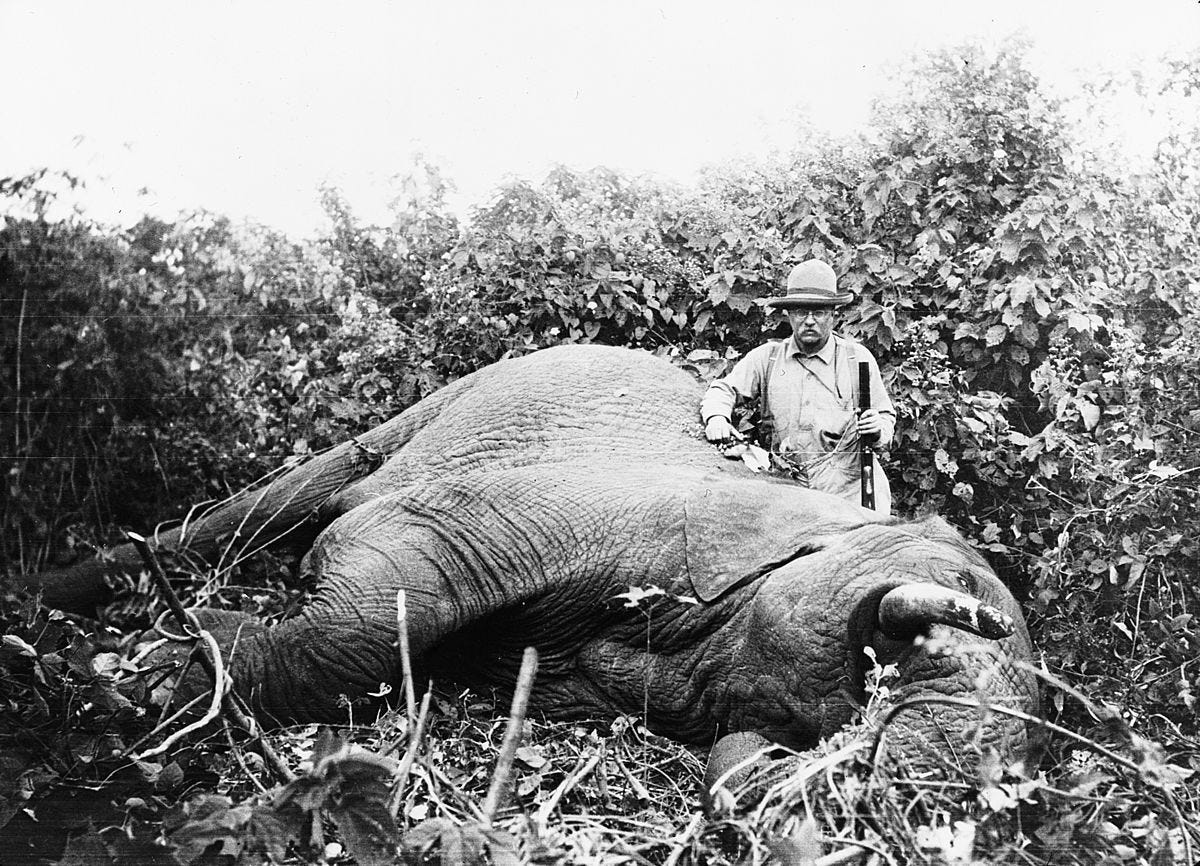
If one stereotype about Americans is true, it’s that we are unbelievably loud. Today more than any day before, I learned this. I am being jolted around in a caravan over uneven roads in Aquila Private Game Reserve, a conservation reserve around two hours east of Cape Town, South Africa. I’m in a caravan with about eighteen other American twenty-somethings, all studying abroad, and currently on an excursion organized by our program. Whenever we stop, we scream. We scream so loud we scare the ostriches away. We halt in front of a white rhinoceros and her child, and the people behind me loudly debate how many men would be necessary to take her down, drowning out our tour guide explaining how close the species is to extinction. Meanwhile the mother rhino stands before us with a stump where her horn should be. They cut the horn off to protect her from poachers; small violence to protect her from worse things.
Aquila is a conservation reserve. It takes animals that have been wounded or displaced and rehabilitates them with the hope of one day releasing them. And yeah, constant human interaction probably isn’t good for animals that theoretically will one day be released into the wild. But this is probably the most humane way to safari. Support a reserve, interact with animals who have already been disrupted from the wild, minimize further harm.
The word “safari” is much older than the practice as we know it. It’s a variation of the Arabic word “safar” (“to journey”), and refers to the long travels Arab traders took to the interior of the continent, spanning back to the middle ages. But the modern concept of “going on safari” is English in origin, and was born in 1836.
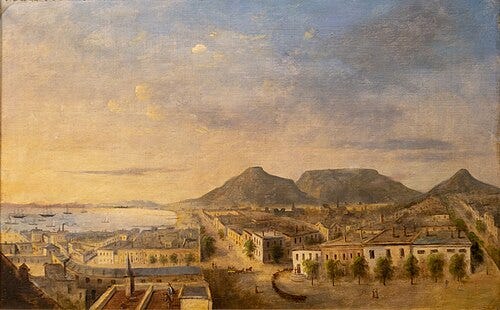
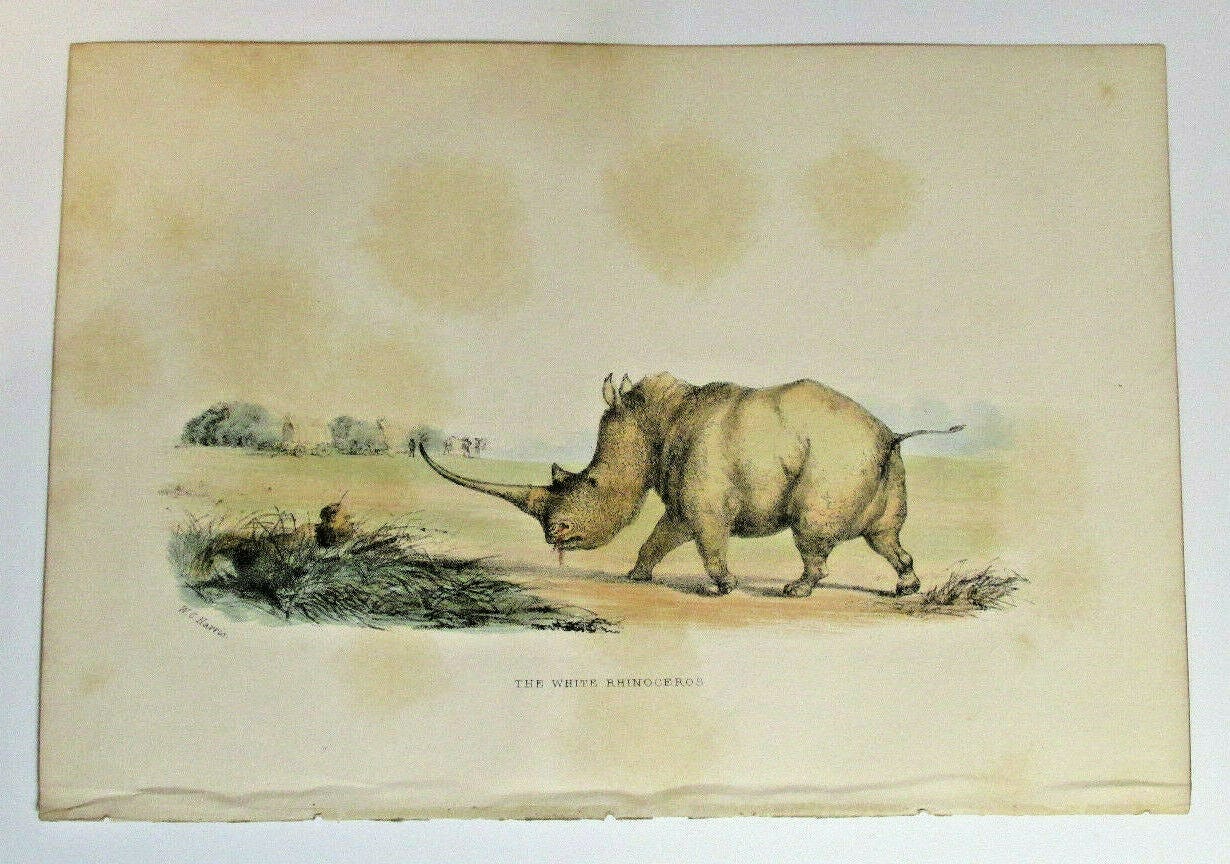
Like our very vocal group of Americans, Cape Town served as a base for early English expeditioners in the 1800s. At this time Africa was largely uncolonized. The slave trade thrived in European dominated port cities, but their reach was still limited to the coast. Though he was not the first European to penetrate “the dark continent” (as coined by all around colonial asshole Henry Stanley), Major Sir William Cornwallis Harris is recognized as the father of the modern “safari”. So what did he bring to the table that was so revolutionary? Why, shooting things, of course!
Harris was a British military engineer who served in the army of the East India Company and fell ill with yellow fever. He’d become obsessed with the drawings and diaries of men who’d explored Africa, and in a stroke of good luck was sent to the Cape Colony, where he recovered. He planned his expedition with two dreams in mind: to “slaughter the great giraffe” and to discover a new species “unknown to science and adorning no museum saving my own.” Suffice it to say, the guy had an ego.
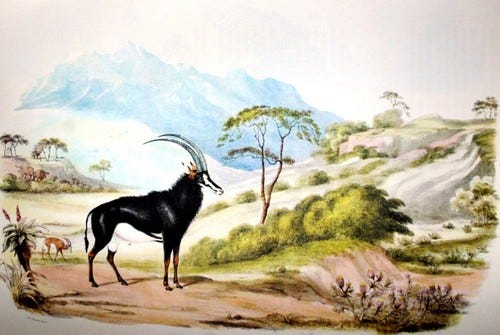
In 1836, Harris journeyed 300 miles into the interior to the Transvaal, guided by Ndbele and Khoekhoe men whom he fed with his kills. Harris was, to his credit, not a mindless killer. He was obsessed with recording the animals he encountered. He measured his kills to ensure his drawings were proportional. He noticed the hide of kudu, a kind of antelope, would lose its hue once it died, and so he would wound the animal without killing it so he could get the color just right. He was horrified by the local Tswana men who rushed around the kudu and stabbed it until it died, which, though painful, might be preferable to dying slowly while a weird Englishman takes your portrait.
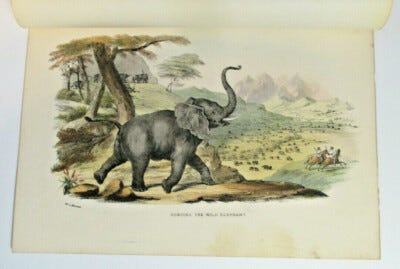
In another story, Harris and his men came across a large footprint, which leads them to a rock valley full of elephants. Overwhelmed with…excitement I guess, Harris and his men went on a wild shooting spree, killing and wounding many. Apparently, Harris felt bad about it the next day and went back to observe his massive graveyard. There he saw a young elephant standing over its dead mother. The elephant approached him and tenderly wrapped its trunk around Harris’ leg. He tried to care for the elephant, but well…(*sniffle*) I don’t want to talk about it anymore.
Harris had a fuzzy conception of the difference between respect and ownership. By his own account, he revered the animals he slaughtered, none more than the giraffe. His dreams finally came true in Limpopo, in the far Northeast of what is now South Africa. He came across a field of 32 giraffes. Rather than hiding and taking aim, he chased them outright. Eventually he neared an 18 foot bull giraffe, who was slowed by the soft sand of the riverbank. Harris shot; it wasn’t enough. He continued to shoot, encircling the giraffe until he’d blocked its path.
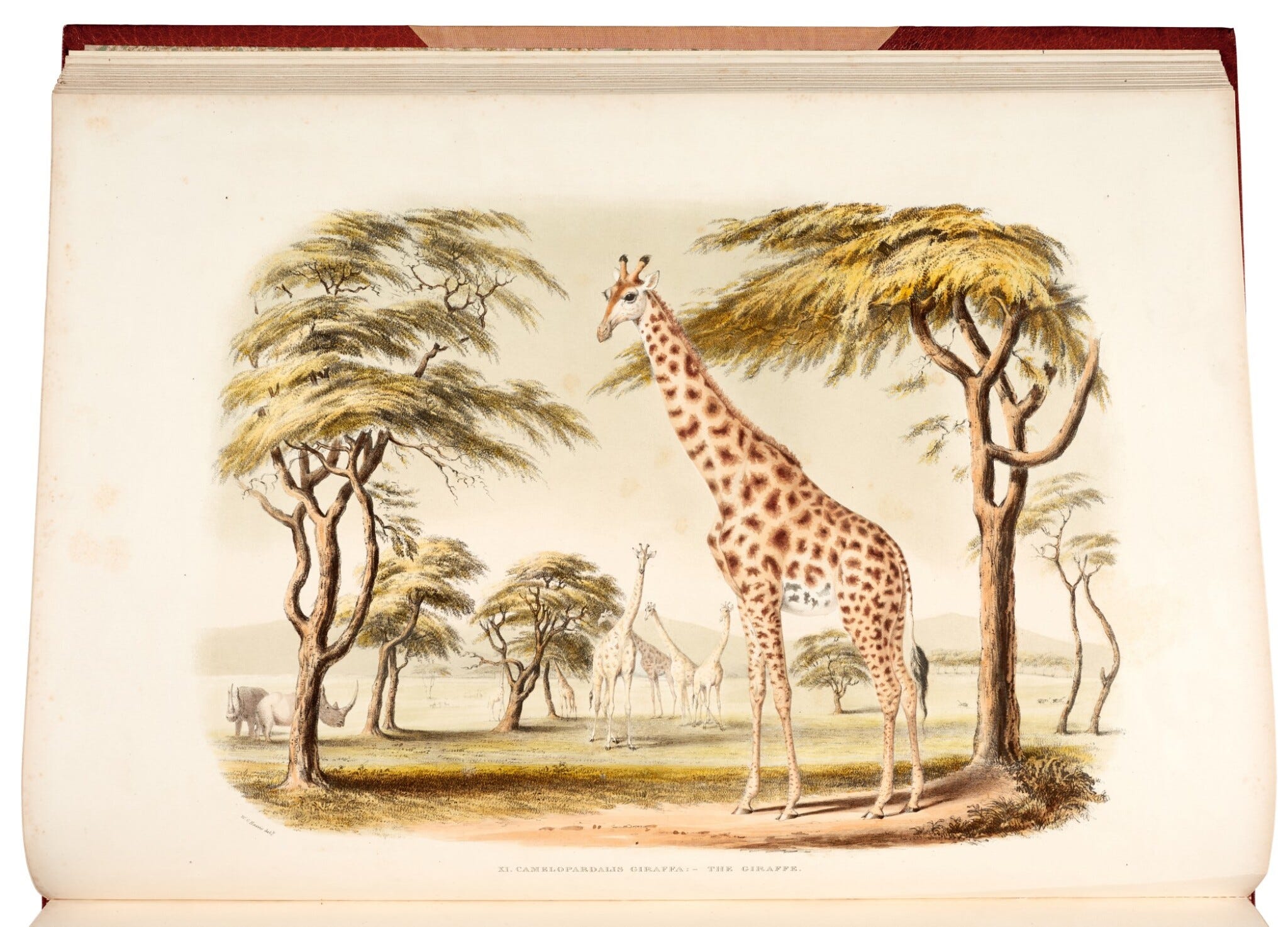
It took 17 shots, and then, “tears trickling from his full brilliant eye”, the giraffe fell. According to Harris’ journal, he sat by the giraffe for two hours, in awe of its beauty. He took pen to paper and drew the spectacular beast. Why he could not have drawn it while it was alive, I do not know. Probably he measured it, but that spoils the story a bit doesn’t it?
It’s estimated Harris killed around 400 large animals, a small portion of which he transported back South. And while Harris’ journals and drawings would later be replaced by better photos and better studies, his real invention, the safari, lives on. Sure, you can’t hunt in Aquila, or Kruger, or the Serengeti, but that wasn’t necessarily the point of Harris’ expedition. It was to understand wilderness through control and domination. We came, we saw, we conquered. Now we can “conserve” what’s left.
Ironically, modern safaris can help conservation if done in limited numbers. They fund the parks that protect endangered species, and even just the foot traffic wards off poachers. This is not to say that tourism is a net good for wildlife by any means. Tourism eats up freshwater, such as in Bali where 65% of freshwater is funneled to tourism. In Antarctica, every tourist arrival accounts for 83 tons of snow loss. The Maasai Mara Reserve in Kenya plans to build a Ritz-Carlton hotel in an established wildebeest migration path. But this doesn’t change the fact that Maasai Mara relies on tourism to stay open. Like tourism in much of Africa, communities once destroyed by safaris now depend on them.
So where does this leave my group of loud Americans, galavanting on a safari tram while our tour guide struggles to get a word out? And why is it the white guys in the back who are sizing up this mother rhino, and the Black women up front telling them to shut up? Is it because safaris today, despite all their conservation efforts, still appeal to the piece of our whiteness that wants to control? We watch this rhino, which we’ve saved from other humans through imprisonment, and we respect her the same way Harris would have respected her, knowing that he had to conquer anything powerful enough to challenge him. And I say “we” because no matter how woke I want to seem, I’m still some white Westerner on safari, like the rest of them.
I’m not here to cancel safaris. Safaris like the one I went on are largely “humane”. Sure, they’re self indulgent, creepily paternalistic, and they continue a practice of environmental stewardship that we’ve decided is necessary ever since we destroyed the ecosystem so badly it needed to be stewarded. But it’s fine, I guess. These guys with their predatory comments can’t hurt this rhino. She’s already been hurt as much as she will be, dehorned to protect her from poachers. We’re as harmless as the safari itself. All we’re doing is breaking something that shattered a long time ago.
End Note: Almost all of the information in the article, aside from the article on African tourism that I’ve linked, is sourced from Bartle Bull’s book, Safari: A Chronicle of Adventure, and my own self righteousness.